Matt and I launched our new book SPoR and Semiotics without much fanfare and this was quite deliberate. This is the thirteenth book released in the Social Psychology of Risk and brings together all of the tools, methods, semiotics and models practiced by SPoR. (FYI, downloads of SPoR books now … [Read more...] about SPoR and Semiotics, A Conversation – Free Download
Book Launch – “Zero, The Great Safety Delusion” – Free Download
Book Launch - Free Download “Zero, The Great Safety Delusion” This book comes just in time for the Zero Conference of Global Safety in November to be held in Sydney. You can get your free download HERE>>>>> Zero remains the greatest plague on the Safety industry. It dominates … [Read more...] about Book Launch – “Zero, The Great Safety Delusion” – Free Download
Are We Learning From Accidents? Book Review
You can purchase Nippin’s ebook here: https://amzn.asia/d/b7cdD8g At last, a book has been released that challenges the populist myths that consume Safety about incident investigation. However, this is not just a book of critique of investigation myths but a positive, practical and constructive … [Read more...] about Are We Learning From Accidents? Book Review
Technique and the Demise of the Agile, Scrum Myth
It is often amusing to observe the Archetype of Technique (Ellul) surface and fade away as old and new fads are adopted and disappear. This seems to satisfy the mysterious quest for efficiency and certainty by people in business and organisations, only to discover that there is nothing ‘different’. … [Read more...] about Technique and the Demise of the Agile, Scrum Myth
Sacred Objects to Remember Un-Safety

To study Mythology is to Study the way humans construct meaning and purpose in living. We see this in how people make things sacred and profane (https://safetyrisk.net/the-sacred-and-profane-rituals-and-semiotics-a-lesson-for-safety/). We will see much of this in Australia on 25 April, ANZAC Day. … [Read more...] about Sacred Objects to Remember Un-Safety
Perfectionism in Safety and the Denial of Humanity

Perfectionism in Safety and the Denial of Humanity Article by Dr Rob Long in response to Safety Under Construction What a bizarre claim that someone can guarantee no accidents, no mistakes, no harm and that ‘100% zero harm is the irrefutable future coming towards the construction industry like a … [Read more...] about Perfectionism in Safety and the Denial of Humanity
Understanding Mythology, Myth, Mythosphere and Science – A Podcast.

For those who want to understand the nature of myth and mythology perhaps this podcast may help: When we use the word ‘myth’ in SPoR we don’t mean fantasy or fairy tale because, myth is unique and is semiotically and poetically verified. Similarly, the myths of scientism that are popular in … [Read more...] about Understanding Mythology, Myth, Mythosphere and Science – A Podcast.
Dumb Ways to Discourse, a Failed Approach in Safety

Dumb Ways to Discourse, a Failed Approach in Safety The Dumb Ways to Die campaign is a classic example of a failure to think about the trajectory of a goal and trajectory of a discourse. The Dumb Ways to Die campaign and it’s self-assessed success (based on hits on the Internet) demonstrate … [Read more...] about Dumb Ways to Discourse, a Failed Approach in Safety
Sifting the Chaff from the Wheat in Safety

I have discussed the skill and wisdom of discernment previously: https://safetyrisk.net/wisdom-discernment-and-an-ethic-of-safety/ https://safetyrisk.net/the-need-for-discernment-in-risk-and-safety/ https://safetyrisk.net/social-psychology-applied-to-the-discernment-of-risk/ I have … [Read more...] about Sifting the Chaff from the Wheat in Safety
Enrol in First Course in Safety Engineering with Dr Barry Spud
A unique opportunity has arisen to study with Dr Barry Spud (BA., MA., MEd., PhD) in Safety Engineering. This four-day course offers a special chance to learn about a ‘different’ approach to Safety Engineering. Barry is suitably placed to teach this course under the following … [Read more...] about Enrol in First Course in Safety Engineering with Dr Barry Spud
Safety, The Expert in Everything and the Art of Learning Nothing
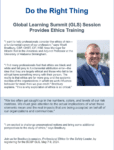
There’s a huge difference between Safety trying to do Ethics and an Ethicist doing safety! Isn’t it bizarre that when Safety wants to learn about Ethics it asks an engineer, this is a classic example: Or when it wants to know about culture it asks an engineer whose tag identity is ‘the … [Read more...] about Safety, The Expert in Everything and the Art of Learning Nothing
More of the Same Expecting a Different Outcome in Safety

When we look at so much of what circulates in safety about ‘safety as a priority’ and togetherness in safety, it’s always just the same old stuff – golden rules, behaviourism and zero. The following is a typical example: https://togetherinsafety.info/ Having just completed the MiProfile Survey … [Read more...] about More of the Same Expecting a Different Outcome in Safety